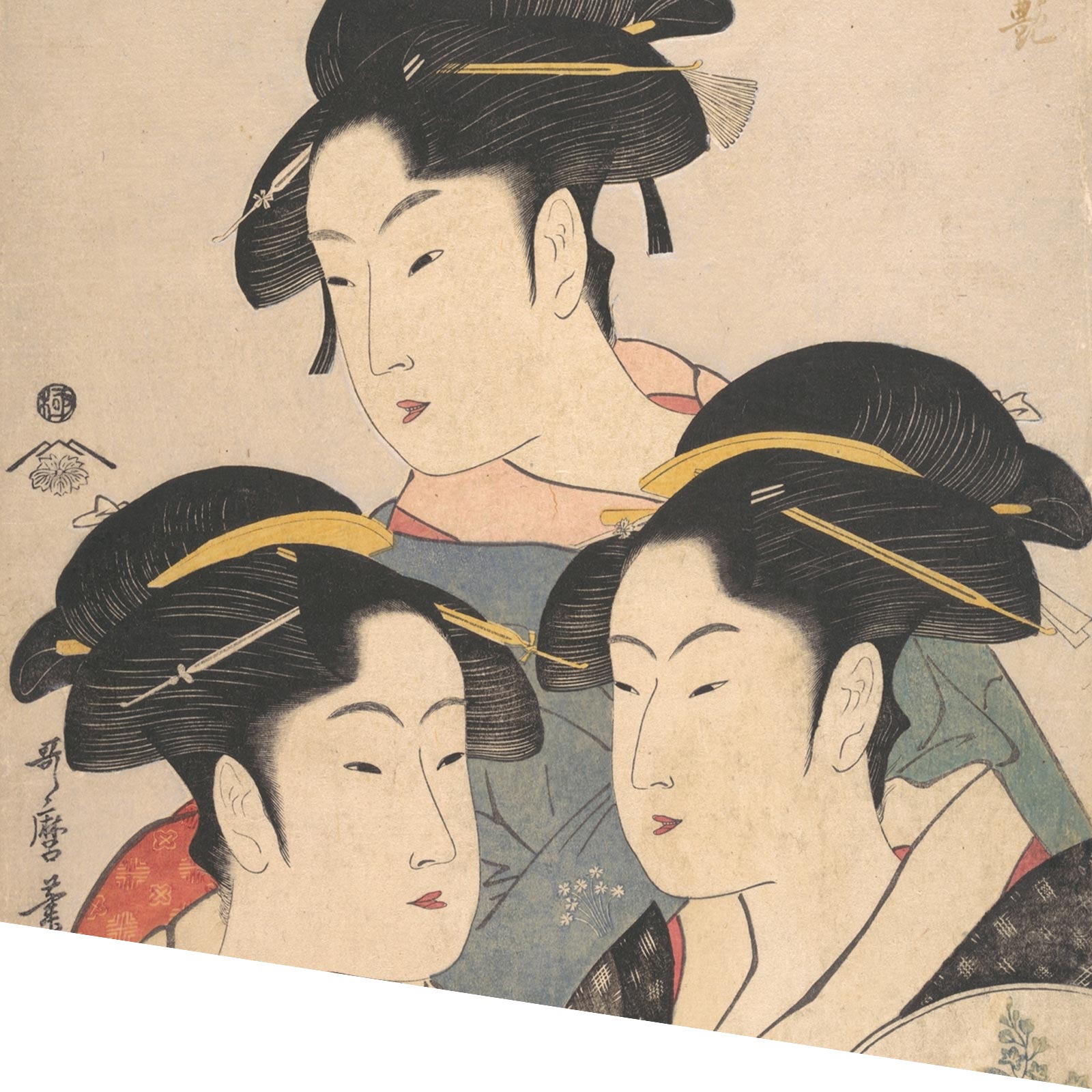
Are you familiar with a genre of ukiyo-e called bijin-ga?
美人画
Bijin-ga
Bijin-ga (美人画, picture of a beautiful woman) refers to various portraits of stunning beauties, and it is one of the most well-loved genres of ukiyo-e art.
In the Edo period, it also played the role of what would be equivalent to a fashion magazine today.
We’ve put together this introduction to bijin-ga to answer some of the questions you may have. You may be wondering, who were these models? Why do they all have the same faces? What do I look for in a bijin-ga? Who were the famous masters of bijin-ga? We’ll go over the highlights of these portraits and their distinctive elements.
We hope this article will be useful both to those who are new to bijin-ga and to those already in the know.
CONTENTS
- What is bijin-ga?
- Since when has the bijin-ga been around?
- Who were chosen as bijin-ga models?
- What were the ideal beauty standards?
- Why do they all have the same faces?
- Five key features to look for in bijin-ga
- Five ukiyo-e masters of bijin-ga
1. What is bijin-ga?
Bijin-ga is a genre of ukiyo-e printmaking that portrays women as the subject matter.
2. Since when has the bijin-ga been around?
Artworks featuring beautiful women have been around in Japan since ancient times. Images of beautiful women had been a core subject of ukiyo-e since the 17th century, but the genre reached its artistic peak in the late 18th century.
During this period, ukiyo-e prints became common among the general public, and one of the most sought-after styles was this portrait of women.
3. Who were chosen as bijin-ga models?
The various women depicted in these bijin-ga portraits ranged from sex workers of brothels and attractive shop girls working at popular establishments to common townswomen from nameless towns.

※ Yujo (遊女, lit. woman of pleasure)
A yujo refers to a prostitute who provided sex services to men at yukaku and post stations.
The term preceded baishunfu (売春婦), which is the more modern equivalent for ‘prostitute’.
※ Yukaku (遊郭, a government-licensed pleasure quarter, enclosed by a wall or moat)
Yukaku refers to the red-light districts where authorized brothels were gathered and enclosed by a fence or moat.
Before the establishment of yukaku, there were no publicly approved quarters where sex workers were employed, and houses of prostitution were located in various regions.
In the late 16th century, Toyotomi Hideyoshi began granting licenses for walled pleasure quarters. The Kyoto quarter of Nijo Yanagimachi, licensed in 1589, is often regarded as the first officially sanctioned district; its successor moved several times and became known as the Shimabara quarter from 1640. The Shinmachi quarter in Osaka was established later, under the Tokugawa shogunate. This is considered to be the origin of yukaku.
4. What were the ideal beauty standards?
Beauty standards of the Edo period were much different from what we are familiar with today. Long, slender faces and thin, narrow eyes are generally said to have been admired at the time.
Below are the features most often described as making a woman beautiful in the Edo period.
- Oblong face
- Narrow, monolid eyes with a composed look
- A clean, straight nose with a slightly high bridge
- A small mouth
- Luscious and beautiful black hair

As you can see, thin eyes, a small mouth, and an oblong face were unique characteristics of what people considered beautiful long ago.
Numerous portraits were created of these beauties, but here’s a question you might be asking.
5. Why do they all have the same faces?
How come all of the women in the bijin-ga have similar-looking faces?
There is no definitive explanation, but one likely reason is that a person’s status was read from their attire rather than from their face. This is because, in the Edo period, it was customary to dress in garments appropriate to one's age and social status.
Moreover, the beauty standards at the time are often described as requiring women to avoid showing their emotions, with a composed face and a closed-mouth smile seen as ideal.
So in order to depict the ideal female form in ukiyo-e, models in bijin-ga were rarely shown with their mouths open to reveal a set of teeth. Most often, the beauties were portrayed with a calm, composed expression.

In ukiyo-e, it was more important to capture the women featured with the ideal beauty standards than to illustrate them true to their individual images or to differentiate their looks. Perhaps that is why the women in bijin-ga came to resemble one another.
6. Five key features to look for in bijin-ga
1. The model’s body language and mood
Bijin-ga portrays an idealized image of beauty rather than an individual likeness — yet from Utamaro onward, artists found ways to suggest mood and character through gesture and expression.
Notice the subtle gestures and postures or the way the kimono is styled. These expressive elements are the highlights of the portraits that bring out the allure and splendor of the models.

2. Fashion, hairstyles, and hair accessories
When viewing a bijin-ga, do pay more attention to the women’s fashion and hairstyles rather than their facial features.
These portraits gained popularity not only because they were beautiful, but also because they served the role of what we would now call fashion magazines by incorporating the latest trends in kimono patterns, dressing styles, hair ornaments, etc. From bijin-ga prints, we can learn about the kimono designs and hairdos that were popular during the Edo period, which also helps us to understand the customs and manners of the time.
Do check out the way the women outfitted and accessorized themselves because great care was put into styling their wardrobes.
Don’t miss out on the Edo-style trends, and be sure to spot the hair ornaments and accessories that make great fashion statements.

3. Kimono design
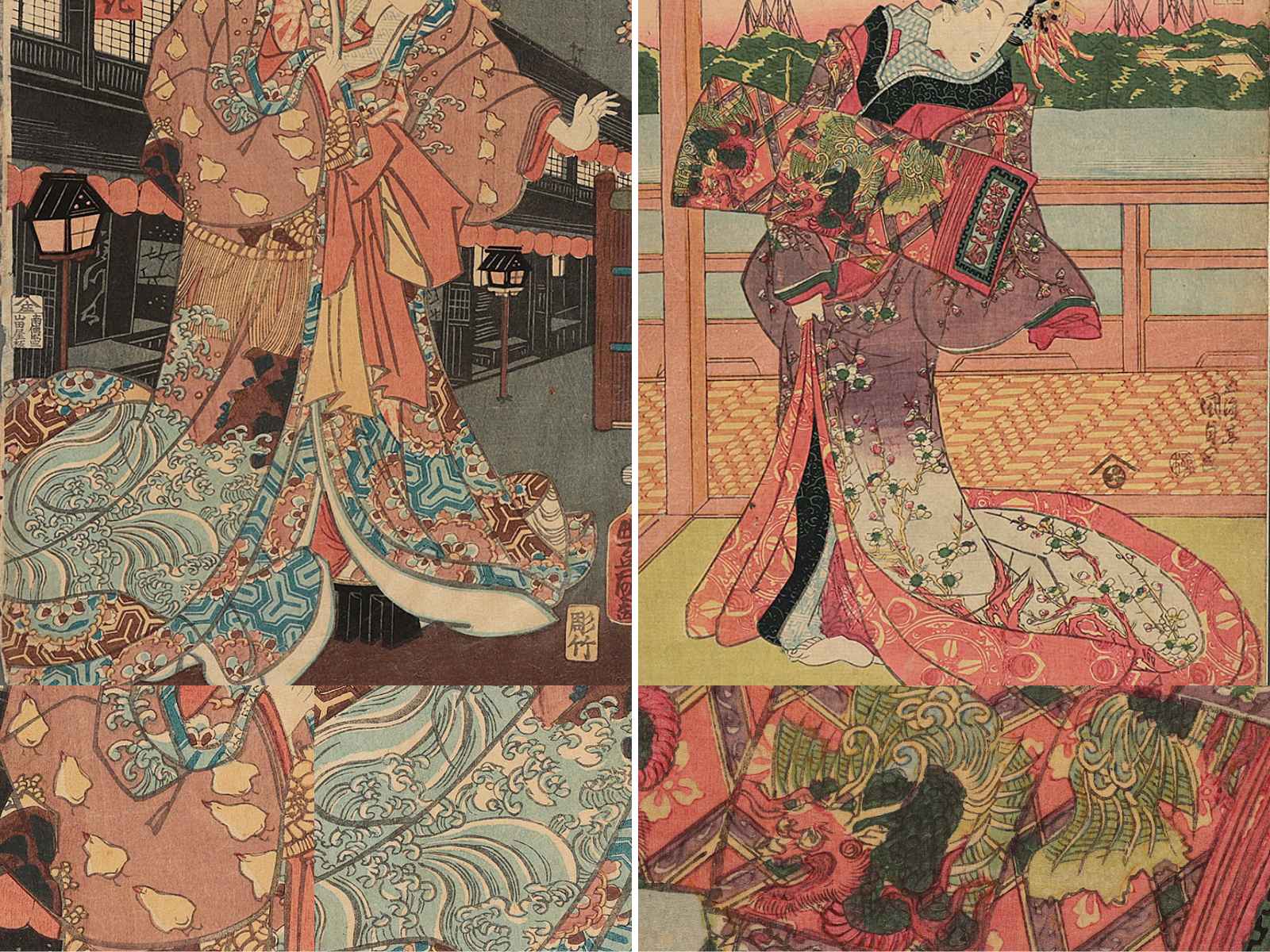
If you see how the kimono are designed, you may be able to spot popular patterns.
Make sure to observe the designs, colors, and styles of the kimono worn by the women.
You may notice interesting details after looking at the patterns more closely, and this will add more fun when viewing the bijin-ga.

4. Where the portrait takes place
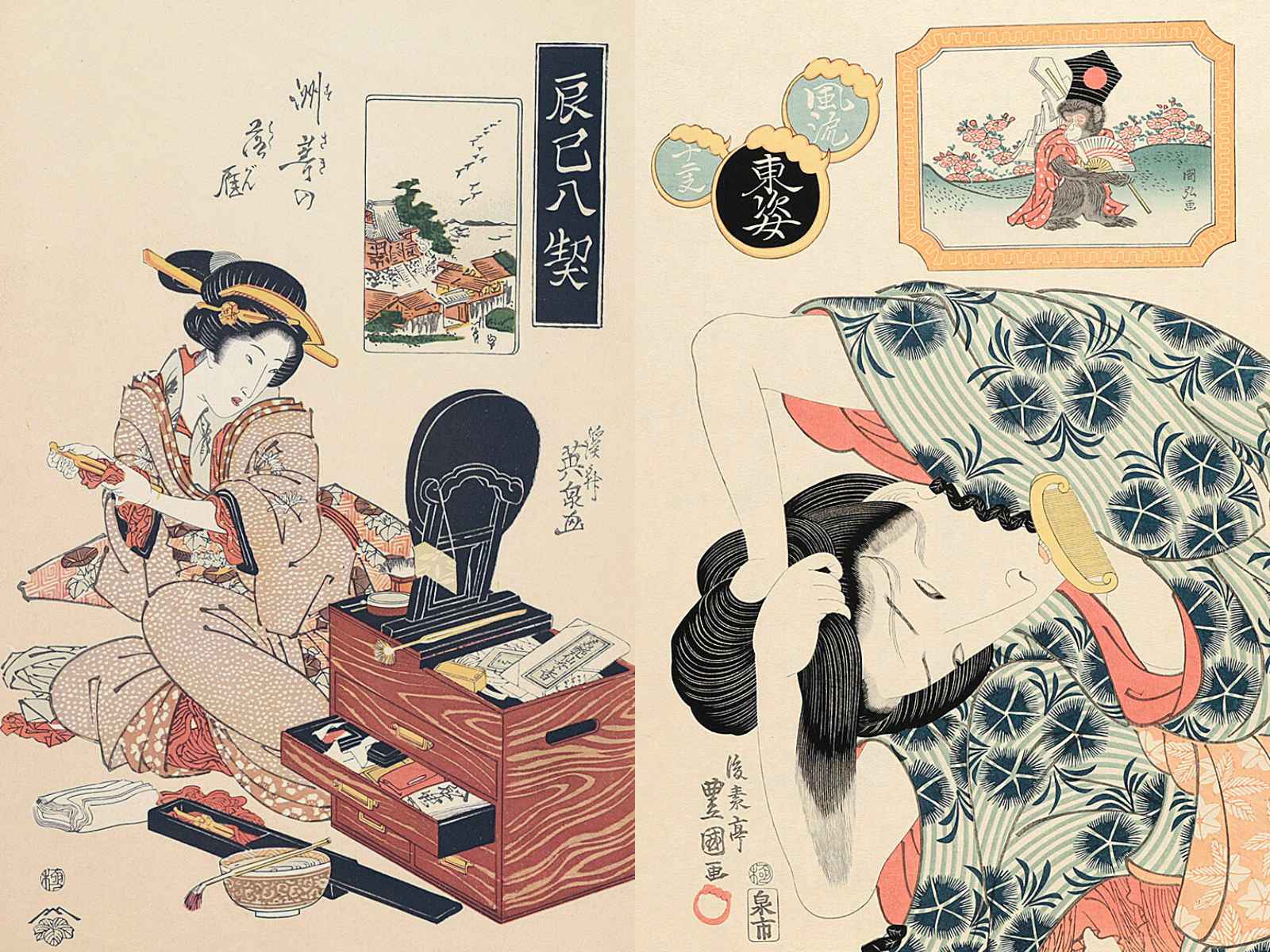
If you look into the entire context in which the person is placed in the picture, you will begin to see a narrative.
What situation is this woman in? What is it that she is doing?
In the case of bijin-ga, the scenes such as a woman doing her make-up or arranging her hair are often suggested through the depiction of accessories, gestures, the looks in their eyes, and facial expressions. If you can pay attention to these details, you may be able to grasp a deeper understanding of the portrait.
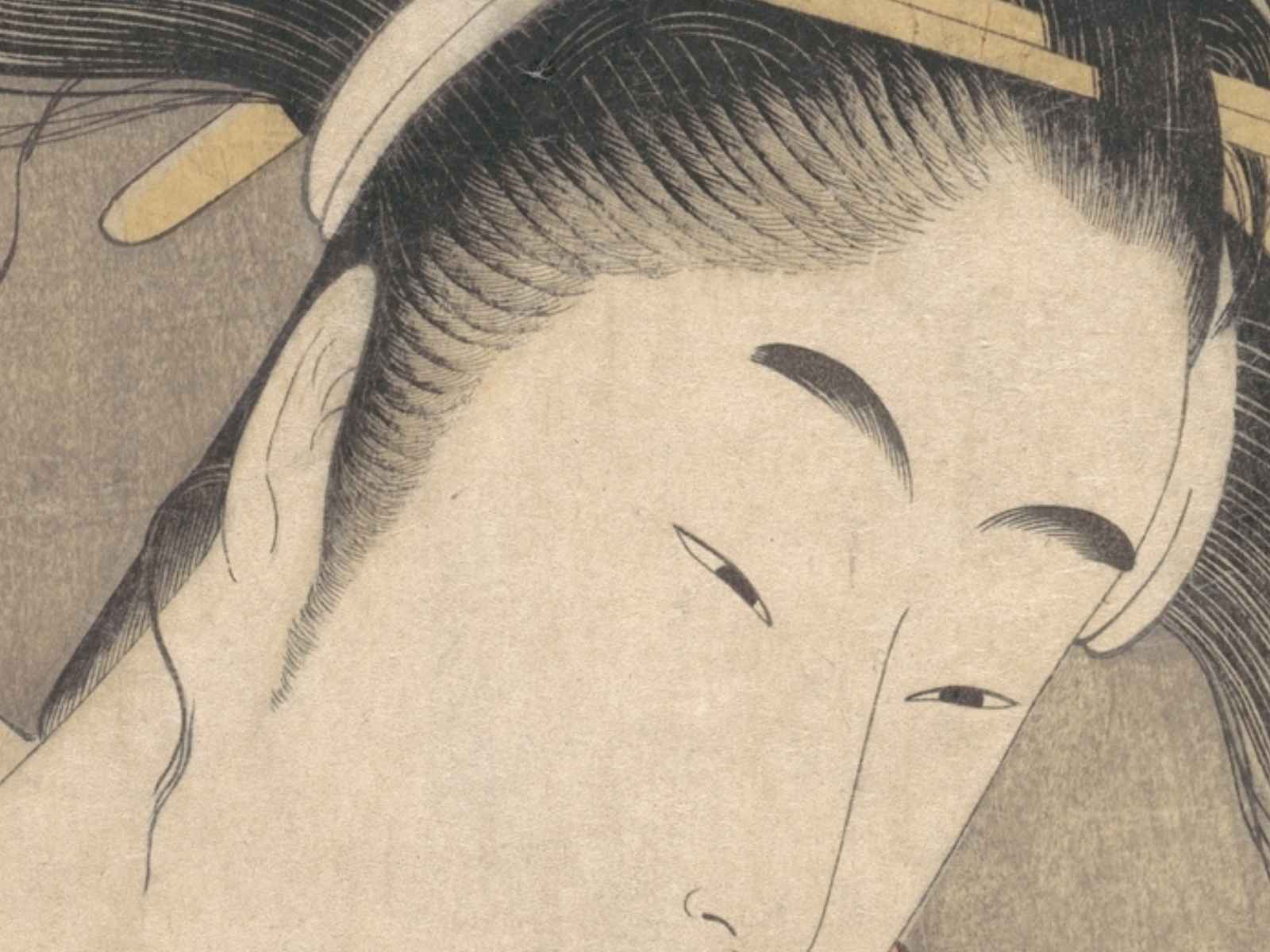
5. Fine hairs
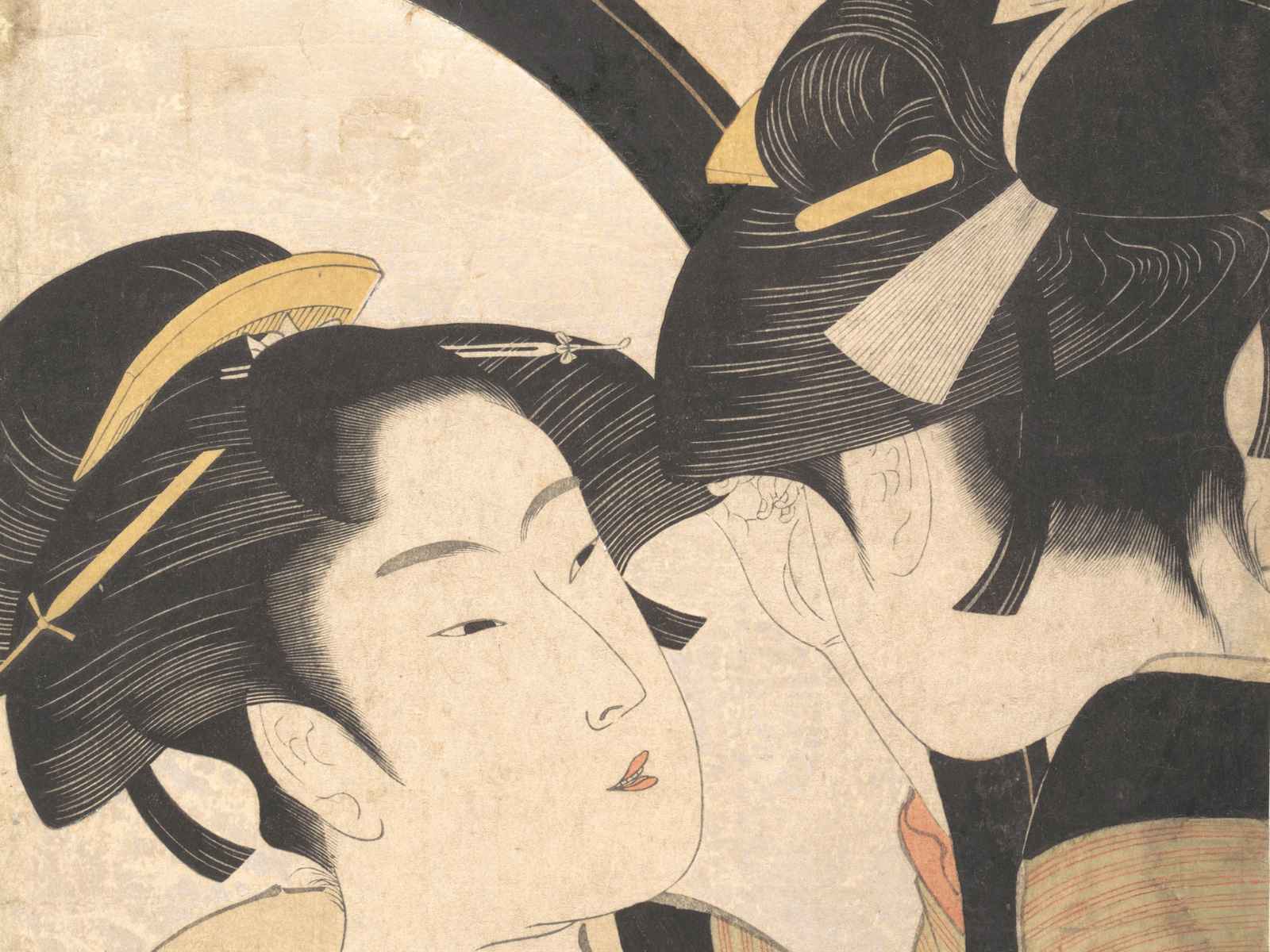
Note the way the women’s hair is illustrated in the bijin-ga. Beautiful hair was especially prized at the time.
Fine hairs like those along the hairlines, eyelashes, and stray tresses were artfully represented by the exceptional handiwork of the horishi (彫師, woodcarver), who devised methods to carve several strands of hair within a range of a few millimeters.

Additionally, ukiyo-e artists may often depict a single stray hair along the hairline or nape of the neck.
This technique allows the hair, as well as the expression of the woman herself, to appear more natural.
Please observe closely how the woodcarver created delicate lines to show each strand of hair with its soft and beautiful texture.
Last but not least, another way to appreciate the bijin-ga is to compare and contrast the varying styles of woodblock print artists.
Even among the notable works of bijin-ga, the beauties were depicted in different styles as the times changed.
Here are some of the most prominent artists of bijin-ga.
7. Five ukiyo-e masters of bijin-ga

Kitagawa Utamaro (喜多川歌麿)
For those in the know, the first artist who comes to mind at the mention of bijin-ga is probably Kitagawa Utamaro, who is considered the foremost master of the genre.
Utamaro excelled at capturing not only the external beauty of the women but also their emotional subtleties. He portrayed the yujo and townswomen with their elegant appeal, earning his position as the artist who brought bijin-ga to its peak.

Keisai Eisen (渓斎英泉)
Eisen was a prominent ukiyo-e artist of the late Edo period.
The women depicted in his bijin-ga are characterized by thicker lower lips, elongated faces, and slanted eyes that are either looking to the left or right.
While the curvatures of the women are represented in their full charm through their bent and hunched postures, the women appear to exude an aura that is somewhat bewitching and even possibly harboring twisted emotions. The air of decadence in these portraits is what makes Eisen’s style unique.
It is also a well-known fact that van Gogh, who was an ukiyo-e enthusiast, depicted a reproduction of Eisen’s bijin-ga in his work.

Utagawa Kunisada (歌川国貞)
From his first confirmed designs in 1807 until his death in 1865, Utagawa Kunisada practically illustrated all aspects of Edo culture, including portraits of kabuki actors and beautiful women. He was one of the most popular artists of the late Edo period.
Kunisada's bijin-ga presents idealized images of the celebrated women of his day — yet it records the hairstyles, make-up and kimono fashions of the period in remarkable detail.

Torii Kiyonaga (鳥居清長)
Kiyonaga developed his distinctive portraiture style through his depiction of well-proportioned, eight-head-tall figures. The beauties appear healthy and dignified, and Kiyonaga's works have received high acclaim around the world.
View items by Torii Kiyonaga
Suzuki Harunobu (鈴木春信)
Suzuki Harunobu played a pivotal role in the invention of nishiki-e, or polychrome woodblock prints.
The beauties depicted by Harunobu are charming rather than seductive, and their tender-sweet and delicate features manifest an air of mellow elegance.
The most delightful part about viewing ukiyo-e prints is comparing the works of different artists. For example, Kitagawa Utamaro’s women are lustrous and delicately portrayed, while Keisai Eisen’s models appear enticing and drenched in decadence.
Ukiyo-e employs unique techniques and colors, so it is fascinating just to admire them.
However, understanding the contexts of the paintings and the historical background of the time period will allow you to further appreciate the art of woodblock printmaking.
We invite you to fully enjoy the bijin-ga portraits, which offer a glimpse into the lifestyles and cultures of the Edo townspeople.
A BEAUTIFUL PERSON BIJIN


What are reproduction woodblock prints?
If you are looking to purchase affordable art pieces, the reproductions of woodblock prints are highly recommended. Many of these reproductions are said to have been made using traditional techniques. The prints have been preserved in good condition, revealing the magnificence of the pigments unique to Japan. The only difference between these reproductions and the originals made in the Edo period is when they were printed. Not only are these reproductions perfect for adding to your collection, but they make for extraordinary gifts of Japanese art to offer to someone special.